
Gutter repair can prevent a small leak, a loose section, or a clog from causing costly damage around your home. Gutters move rainwater away from the roof, siding, and foundation. When part of the system fails, water may collect in areas that should stay dry.
Some common gutter problems have simple fixes when you catch them early. This guide covers small repairs homeowners can consider and signs that it is time to call a professional.
Why Fast Gutter Repair Matters
A minor drip may not seem serious during light rain. However, water that keeps running over the same area can stain siding, soak fascia boards, and create wet spots near the foundation. A loose gutter may also pull farther away from the roof when it fills with water.
Early repairs can keep one damaged area from affecting the rest of the system. Check your gutters after a storm and look for leaks, overflow, standing water, or loose sections. These warning signs can help you find a problem before it grows.
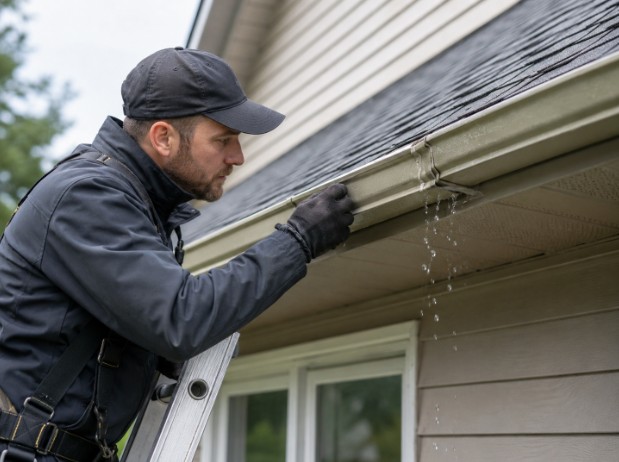
Gutter Repair for Small Leaks
Small leaks often appear around seams, corners, end caps, and downspout outlets. Start by removing leaves and dirt from the damaged area. The surface must be clean and dry before a gutter sealant can form a strong bond.
Apply an outdoor sealant made for your gutter material and follow the product directions. Do not rely on sealant when the metal has large holes, deep rust, or wide cracks. These problems may require a patch or a new gutter section.
Repairing Loose or Sagging Gutters
A sagging gutter cannot move water toward the downspout as planned. Water may remain in the low area, adding weight and attracting more debris. Check for loose screws, damaged hangers, or spaces between the gutter and fascia.
Loose hardware may be tightened or replaced when the fascia board is still solid. The gutter must also have a slight slope toward the downspout. A professional should adjust long, high, or badly bent sections to avoid further damage.
Signs a Gutter Is Starting to Sag
Watch for these common signs:
- Water stays in the gutter after rain.
- The gutter line looks uneven.
- Fasteners are pulling away from the roofline.
- Water spills over one specific area.
- The gutter moves during windy weather.
Sagging may result from loose hardware, poor slope, heavy debris, or a damaged fascia board. Finding the cause is important because tightening one screw may not correct the full problem.

Gutter Repair for Clogged Downspouts
A clogged downspout can cause water to back up and spill over the gutter edge. Remove leaves and debris from the opening first. You can use a garden hose to flush a light blockage, but stop when the water does not move freely.
Check the lower elbow because leaves often gather where the pipe bends. A section that can be safely reached from the ground may be removed and cleaned. Hard clogs, upper-floor gutters, and unsafe rooflines should be handled through professional [gutter cleaning services].
Resealing End Caps and Gutter Joints
End caps and gutter joints may leak when their old sealant dries, cracks, or pulls away. Remove the loose sealant and clean the joint. Allow the area to dry before applying a gutter-safe product along the inside seam.
A joint that keeps separating may have poor alignment or added pressure from a sagging section. Repeated sealing may hide the leak without fixing its cause. Have the gutter inspected when the same joint continues to open.
When Gutter Repair Needs a Professional
Some gutter work should not be treated as a do-it-yourself project. Call a professional when the gutter is high above the ground, several sections are loose, or the fascia feels soft. Large holes, sharp metal, heavy rust, and water entering the home also require prompt help.
Professional gutter repair services can address the damaged section and check the rest of the system. When the gutters have widespread damage, a new gutter installation may be safer and more cost-effective than repeated repairs.
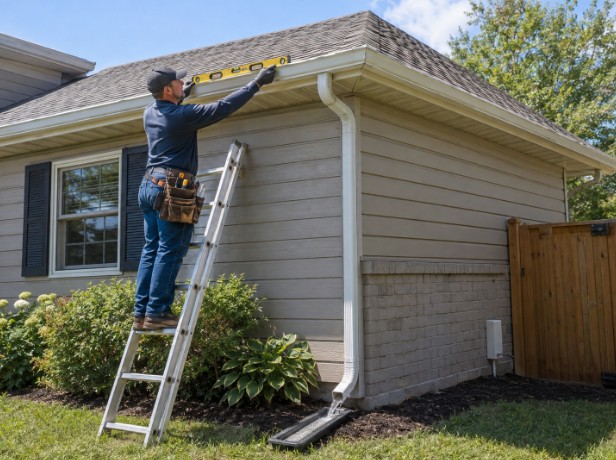
How to Prevent More Gutter Repair
Routine care can help your gutters work with less strain. Remove leaves, roof grit, twigs, and other debris before they create a thick clog. Inspect the system after heavy rain or strong wind and look for overflow, drips, and loose fasteners.
Trim branches that hang directly over the roof when it is safe to do so. Gutter guards may also reduce the accumulation of large leaves and debris. However, guards do not remove the need for regular checks and cleaning.
Frequently Asked Questions
Can I Seal a Leaking Gutter Myself?
A small leak in an easy-to-reach area may be sealed after the surface is cleaned and dried. High gutters, large cracks, and rusted sections need professional service.
Why Does My Gutter Keep Overflowing?
Overflow may be caused by leaves, a blocked downspout, poor gutter slope, or a gutter that cannot handle the water flow. An inspection can confirm the cause.
When Does a Gutter Need Replacement?
Replacement may be needed when there are many leaks, large holes, deep rust, bent sections, or damage throughout most of the gutter system.
Are Sagging Gutters Dangerous?
Sagging gutters can become unsafe because trapped water and debris add weight. A loose section may damage the fascia or pull away from the home.
Schedule Gutter Repair Before Damage Spreads
Small repairs can correct a loose fastener, an open seam, a light clog, or a minor drip. However, the fix must address the cause of the problem. Covering a visible leak without inspecting the surrounding sections may allow the damage to recur.
Protect your roofline and keep rainwater from pooling around your home. Contact California Gutter Co to request an inspection and professional gutter repair. You can also visit our blog for more practical advice about gutter cleaning, maintenance, and drainage.