
A clogged downspout can cause rainwater to back up in your gutters and spill over the sides of your home. If the blockage is not cleared, water may collect near the roofline, siding, foundation, or landscaping. The good news is that many simple clogs can be cleared with a few basic tools and the right approach.
This guide explains how to find a blockage, clear it safely, and reduce the chance of another clog forming.
Signs Your Downspout May Be Clogged
A clogged downspout is not always easy to spot from the ground. In many cases, the first sign appears during or shortly after heavy rain.
Watch for these common warning signs:
- Water spilling over the edge of the gutter
- Little or no water coming from the bottom opening
- Water collecting around the foundation
- Gutters that stay full after the rain stops
- Leaves or debris packed around the top opening
- Water leaking from gutter or downspout joints
If you notice these problems, check the system before the next storm. A small blockage can become harder to remove as more debris collects.
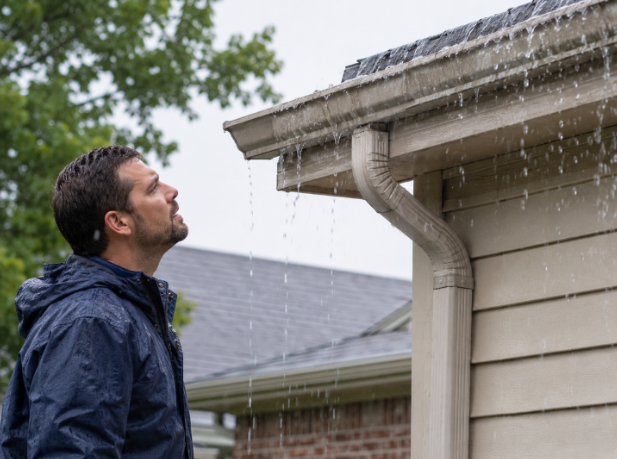
Start by Checking the Downspout Opening
Before using any tools, look at the top and bottom of the downspout. Leaves, twigs, roof grit, and other debris often collect near these openings. If you can safely reach the gutter, remove loose material around the entrance by hand while wearing work gloves. A small gutter scoop can also help.
Next, check the bottom opening. Sometimes wet leaves form a tight plug near the outlet. Pull out any debris you can reach without forcing your hand deep into the pipe. Never climb onto a wet or unstable roof. If the area cannot be reached safely from a secure ladder, consider using a professional gutter cleaning service.
Flush the Downspout With Water
Once loose debris has been removed, try flushing the downspout with a garden hose.
Place the hose near the top opening and run water into the pipe. Start with normal water pressure. If water flows freely from the bottom, the blockage may already be gone. If the water backs up, turn off the hose. Continuing to add water can cause the gutter to overflow.
You can also try flushing from the bottom upward. Place the hose inside the lower opening and gently run water through it. This may loosen debris that is stuck farther inside.
Avoid using extreme water pressure. Too much force may loosen gutter joints or damage older parts.
Break Up a Tough Downspout Clog
If water does not clear the blockage, you may need to loosen the debris by hand. A plumber’s snake or flexible drain auger can work for some downspout clogs. Feed the tool slowly into the opening until you feel resistance. Turn it gently to break apart packed leaves and debris. Do not force the tool. Downspouts are often made from thin aluminum or other lightweight materials that can bend or separate.
For a removable section, you may also be able to disconnect the lower part of the pipe. Clear the debris, rinse the section, and reconnect it securely. If the blockage is inside an underground drain, the problem may require a different repair. A professional inspection can help find the exact location of the obstruction.
Clean the Gutters Around the Downspout
Clearing the pipe will not solve the problem for long if the gutter above it is still full of debris.
Remove leaves, pine needles, small branches, and roof grit from the nearby gutter channel. Then rinse the gutter with a small amount of water and make sure it moves toward the outlet.
This is also a good time to look for:
- Loose gutter sections
- Sagging areas
- Cracked seams
- Damaged fasteners
- Poor drainage
- Signs of corrosion
If the gutter system is damaged or pulling away from the home, a professional gutter repair service may be a better solution than repeated cleaning.

How to Prevent Another Downspout Clog
Regular care is one of the easiest ways to prevent another blockage. Clean your gutters at least once or twice a year, depending on the number of trees around your property. Homes surrounded by trees may need more frequent service.
Keep branches trimmed away from the roof when possible. You may also want to consider gutter guards. These systems can reduce the amount of large debris entering the gutter, although regular inspections are still important. After a major storm, take a quick walk around your home. Check that water is leaving each downspout and flowing away from the foundation.
FAQ About Clogged Downspouts
What usually causes a downspout clog?
Leaves are one of the most common causes. Twigs, pine needles, roofing material, dirt, and other debris can also collect inside the pipe.
Can I use a pressure washer on a downspout?
It is usually safer to start with a garden hose. Strong pressure can damage joints, seals, or lightweight gutter materials if used incorrectly.
How do I know if the clog is underground?
If the visible downspout is clear but water still backs up where it enters an underground drain, the blockage may be below ground.
When should I call a gutter professional?
Call for help if the clog keeps returning, the pipe cannot be reached safely, or you notice leaks, sagging gutters, damaged sections, or drainage problems.
Keep Your Downspout Flowing Properly
A blocked downspout should be cleared as soon as possible. Start by removing visible debris, flushing the pipe with water, and checking the surrounding gutter. Regular cleaning can also help water move safely away from your roof and foundation.
If the blockage will not clear or your gutter system needs professional attention, California Gutter Co can help. Contact us to schedule gutter service, or visit our blog for more tips on caring for your home’s gutter system.